
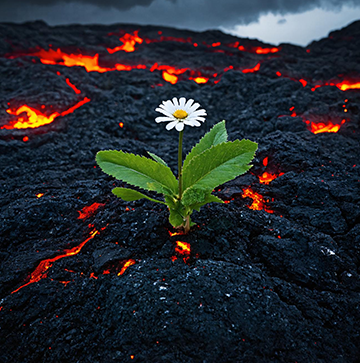
What Surviving a Fire Teaches About Control, Surrender, and Inner Strength
Fire is sudden. Unforgiving. It does not announce itself or wait for permission. In a matter of seconds, it can unravel everything a person believes about safety, control, and strength. Surviving a fire is not only a physical ordeal. It is a confrontation with vulnerability at its most extreme, one that strips away autonomy and forces a profound reckoning with what resilience truly means.
At the heart of catastrophic trauma lies a painful truth: control is often an illusion. And it is only when that illusion is shattered that inner strength begins to take on a new form.
The Illusion of Control Before Crisis
Before trauma, strength is commonly defined by self-reliance. Control over one’s body, environment, and future is treated as a form of protection. Planning, discipline, and independence are seen as safeguards against chaos. The belief is simple: if life is managed carefully enough, disaster can be kept at bay.
Fire exposes how fragile that belief is.
When a crisis of this magnitude occurs, preparation becomes irrelevant. The body reacts instinctively, without time for logic or restraint. In those moments, there is no control over fear, pain, or consequence. What once felt stable collapses instantly, leaving behind shock and disorientation.
This is where the first transformation begins.
When Autonomy Is Taken Away
After the flames are extinguished, survivors often enter a new reality in which personal autonomy almost entirely disappears. Severe burns demand medical intervention that overrides routine and choice. The body becomes subject to schedules, procedures, and constant monitoring. Pain determines movement. Healing dictates time.
Privacy fades. Independence erodes.
For many survivors, this loss of agency is as devastating as the injury itself. The body no longer feels like a trusted companion, but a fragile and unpredictable space. Strength, once measured by capability and endurance, no longer fits the situation.
The crisis forces an uncomfortable realization: control can no longer serve as a foundation for survival.
Resistance and Its Breaking Point
The instinct to resist is powerful. Many trauma survivors attempt to reclaim control through endurance. They try to push through pain, suppress fear, and minimize vulnerability. This response is rooted in long-held beliefs about strength and self-sufficiency.
But fire teaches a difficult lesson.
There comes a moment when resistance costs more than it saves. Fighting reality drains the body of the energy it desperately needs. The effort to appear strong becomes unsustainable. At this point, survival demands a shift.
This is where surrender enters—not as defeat, but as necessity.
Redefining Surrender
Surrender is often misunderstood as weakness or resignation. In the context of catastrophic trauma, it is neither. Surrender is the acceptance of what cannot be controlled. It is the decision to stop battling reality and instead move within it.
Healing cannot be commanded. Skin grafts take time. Nerves respond slowly. Pain does not yield to determination. By releasing the need to dominate the process, survivors make room for care, patience, and support.
Surrender allows medical professionals to do their work. It allows loved ones to help without resistance. It allows the survivor to exist without constantly proving strength.
Paradoxically, this release becomes a source of resilience.
Strength in a New Form
Fire dismantles performative strength, leaving something quieter behind. Inner strength begins to look different. It is no longer loud or visible. It does not rely on productivity or independence.
Instead, it shows up as a presence.
Strength becomes the ability to remain with pain without denial. To accept vulnerability without shame. To endure long stretches of uncertainty without collapsing into despair. It lives in patience, adaptability, and the willingness to be seen in moments of weakness.
This form of strength does not impress. It sustains.
The Myth of “Bouncing Back”
One of the most damaging expectations placed on trauma survivors is the idea of returning to normal. Fire makes this impossible. Bodies change. Energy shifts. Limitations emerge where none existed before.
Recovery is not linear. Progress is uneven. Setbacks arrive without warning.
True resilience does not come from reclaiming the past, but from adapting to a changed reality. This adaptation requires grief, honesty, and time. Letting go of the pressure to heal quickly creates space for genuine recovery.
Strength lies in learning how to live forward, not backward.
Learning Interdependence
Fire forces survivors to confront dependence in ways they may never have before. Tasks once taken for granted now require assistance. This can feel deeply unsettling, especially for those who built their identity around self-sufficiency.
Yet accepting help becomes an act of courage.
Allowing others to care requires trust. It requires vulnerability in moments when vulnerability feels dangerous. Over time, many survivors discover that resilience grows stronger when it is shared.
Interdependence does not diminish strength. It reshapes it.
What Remains After Control Is Gone
Fire takes much: comfort, certainty, autonomy, and the illusion of safety. However, it does not take everything.
When control is stripped away, what remains is the capacity to endure reality as it is. To adapt without denying loss. To rebuild identity around truth rather than illusion.
Surviving a fire teaches that strength is not found in holding tighter. It is found in knowing when to let go.
In addition, in that surrender, resilience begins—not as a performance, but as a quiet, unbreakable core.